Liz’s Hot News

hd-wallpaper-christmas-gifts-and-globes-wallpaper

Just in time for the holidays!  Your own special gift! A winner will be chosen by random drawing from all subscribers to my new newsletter, Liz’s Hot News! Signup period ends at midnight December 13 for this drawing, so share the info with your friends today. Gift certificate, goodies, and more!

This monthly newsletter will feature new releases, reviews, special events, writer tips, useful links, contests, and more. It’s a quick and easy signup and it’s free. Please join the fun by signing up today at http://eepurl.com/bHOyS9


New Release Giveaway!

hair pull copy


Three signed copies of Caerwin and the Roman Dog will be given away at the end of the Goodreads Giveaway Event! From now through December 1, you can sign up for your chance to win a copy at https://www.goodreads.com/book/show/27235437-caerwin-and-the-roman-dog

This is a completely free, no obligation event.

Selling Indie

Cartoon Technology 0115The biggest upside to Indie publishing is getting your work out there without trying to squeeze through the bottleneck of agents and publishers. The downside is that no one may ever read your work. Hordes of writers have become Indies, a gaggle of writhing hopefuls who fell away from the bottleneck, all wildly optimistic that this one story will be the one that lights a readership fire. They’re tired of waiting, infuriated by the industry profit margin, and disillusioned by the insider game. Most would prefer not to become rich and famous posthumously.

The primary benefit that derives from gaining a publisher—aside from the obvious ego boost—is the possibility of a few ‘mainstream’ reviews. That’s the stamp of ‘legitimacy’ that many readers want. It’s the advantage that Indies can’t get.

Unless they pay for it. One industry staple, Romance Times, dispenses reviews at a cost of $450. Per review. Kirkus Reviews, a longtime respected reviewer, charges $425—if you can wait 7-9 weeks. An expedited review costs more.

Not only are there significant ethical issues in paying for reviews, most authors don’t have that kind of money. To be competitive, ebooks are priced between 2.99 and 3.99. The profit margin is at most $2 per book. The book would have to sell 225 copies just to earn back one review fee.

By necessity, then, authors ‘buy’ reviews in other ways:

  • Book giveaways wherein months (even years) of work are handed out like candy at a Christmas parade in the hope that recipients will post a favorable review. Which many don’t.
  • Contests, a more costly and time-consuming method of giving away books in hope of gaining attention and reviews.
  • Blog tours, a service authors usually pay a promoter to handle and which, in theory, presents the book, excerpts, an author bio, and often the blogger’s review to all the fans and followers of the blogs participating in the tour. Unfortunately, blogs aren’t faithfully attended by their fans and followers so there’s no guarantee that the days a particular book is featured are days that more than a handful of potential readers see it. Worse, popular blogs quickly develop a backlog of review and tour requests. Worse yet is feedback from authors who say they’ve found no measurable increase in sales from blog tours.
  • Review tours, similar to blog tours. Either pay a promotions person to handle this or spend countless hours submitting review requests and getting back two responses (if you’re lucky). There is at least the hope of gaining legitimate reviews.
  • Goodreads is an important place to set up an author page. But don’t get your hopes up. The site is primarily for readers to discuss and review books. Various discussion groups cater to specific genres/subgenres, but most have a specific thread where authors are allowed to pitch new works, and most readers seem to ignore this thread like the plague. Seeking reviews is mostly a cry in the wilderness.
  • Authors must have a marketing platform whether they’re Indie or not. Books and articles abound with advice about how to set up such a platform. The primary objective with a platform is to develop an audience who will purchase and, secondarily, review books. Venues considered critical include Instagram, Twitter, Facebook, blogs, Goodreads page, Amazon author page, website… In truth, if a writer tended to all these venues as conscientiously as advisers recommend, he/she would have no time left to write.
  • Posts to an author’s Facebook page could, in theory, generate an appreciative following willing to read and review a new release. Authors are advised to build a fan base by posting personal bits and fun stuff along with book excerpts and clever visuals alternately called ‘memes’ or ‘teasers’. Authors are advised to post often so that the Facebook algorithms keep you in a high volume category.
    • Building a social network smacks of ‘buying’ fans and reviews. When was the last time George R. R. Martin posted to your Facebook page? Or any serious author? It’s potentially counterproductive to ooh and ahh over someone’s cute baby post or rave over her recipes and then hit her up to buy your book.
    • Accounts versus pages, a little Facebook 101. A person’s Facebook account allows that person to invite friends and establish a variety of Facebook connections. The account person can join groups and connect to authorish places like Goodreads, which will happily post your most recent book reviews and other Goodreads activities to your account page. If an account person wishes to separate his/her account (with all its friends, relatives, and personal information) from his/her author information and promotions, he/she can set up a separate author page. The author page cannot invite friends, but you as the account person can invite your friends to ‘like’ your author page. Absurdly, the author page cannot connect with Goodreads or join groups. So unless the author sets up a false identity account with Facebook, he/she will be limited to what can be accomplished through an author page. Or suffer through the mingling of personal and author friends, groups, and posts on the main personal account.
    • Contrary to logic, Facebook does not share your posts with all your friends, or if you have an author ‘page,’ with all those who ‘liked’ your page. If you fall into a low volume category, as few as five people might see any given post. Even posting multiple times per day to keep your volume high will not assure that everyone on your friend or like list will see your post. Facebook does not fully distribute your posts.
    • No one watches Facebook all day. A person’s newsfeed on Facebook scrolls along either in real time (“Most Recent”) or as ‘Top Stories.” Facebook’s default sequencing for the news feed is “Top Stories,” meaning that a post that gains the most comments/traffic gains top placement on the feed. Whether a viewer sets his/her newsfeed to Most Recent or Top Stories, the more Facebook friends and likes that viewer has, the greater the number of items showing up on the newsfeed and the less chance he/she will ever see a particular post.
    • Of particular concern to romance authors, Facebook restricts its ‘boost’ options by disallowing ‘adult’ content. A ‘boost’ changes your post into an advertisement. You pay a certain amount and specify how long the ad will run. If you are advertising a spicy romance novel or using any exposed skin in your image, you run the risk of receiving a refusal to your ‘boost,’ as in: “Your ad content violates Facebook Ad Guidelines. Ads are not allowed to promote the sale or use of adult products or services, including toys, videos, publications, live shows or sexual enhancement products.” [You might, however, post a Facebook link to a blog post like this one and thereby put your name out there without violating these Puritanical policies.]
    • Facebook groups theoretically offer authors multiple marketing opportunities. Many such groups, such as All About Books, Great Reads, or Book Heaven, enjoy well over 10,000 members. Authors quickly find, however, that posting to such groups yields pretty much nothing. It seems that all 10,000 members are other authors. Some groups might have more potential in connecting potential readers with the author’s works, but these are specialty groups focusing on one particular sub-genre (e.g., Domination Romance, Band of Dystopian Authors & Fans). Often such groups do not allow book promotion posts unless the author is a regular participant in group discussions, if at all. Which again brings up the thorny issue of exactly how many hours there are in a day. Still other groups which potentially attract readers are the discount groups (99¢ Kindle Reads, Free Books or Us) where the author opens a vein in order to gain one purchase.
    • For authors of non-romance, forgetaboutit. There are no Facebook groups for promoting biographies, memoirs, history, and other categories. Such works can be advertised on some of the general Facebook groups such as All About Books, but again, posts zoom by fast, about one every three minutes. And it’s preaching to the choir.

While Amazon offers promotional opportunities to authors, like Facebook it refuses ads to authors who write sexual content. [No such restrictions exist for authors of gore, horror, and other bloody narratives. It’s sex that sets their hair on fire.]

Gaining readers and reviewers has always been the challenge for writers, whether aided by a publisher or not. With all the free or 99 cent books out there, it’s a miracle that anything sells for more. At least as frustrated as the authors, however, are the readers who want a good book and can’t find it amid the rabble. Various review scams, paid or not, mean lousy books may gain high reviews and good books never hit the radar.

At the least, authors need to advertise their credentials—so many years studying literature and English, so many years writing, so many publications under their belt, and average review ratings for those publications. For a reader seeking quality, this information along with the book content preview offered on Amazon sale pages may be the most consistent metric by which to judge Indie books.

Sci-Fi/Fantasy vs Historical Fiction — What’s the Shared Ground?

braid promo copyI think every reader shares a fascination with alternate worlds. Thus the appeal of not only science fiction and fantasy but also historical fiction. In Caerwin and the Roman Dog, I explore the past as it existed at the height of the Roman Empire and the end of Celtic control over Britannia.

In my work over the last year in putting this novel together, I reached the obvious conclusion that research is the key to authoring a good book. It doesn’t matter if the story centers in the past or the future, or even in the present day. Building a believable setting where the characters will interact means making sure that the ‘world-building’ is effective. What did they eat? What was the weather? What were their daily routines?

In my novel, the setting is the Shropshire area of England, a place near the River Severn that borders Wales. Elusive mists shroud ancient hillforts where Rome’s legions pursue their conquest of the native tribes. Despite greater numbers, native warriors wield weapons and armor far inferior to Roman arms. (Details of Roman armor can be seen on my “Romans” Pinterest page.) The biggest difference, however, rests in Rome’s military organization—the army functions like a well-oiled machine.

It’s fascinating to study the chain of command that Rome perfected and which is used by today’s writers even in the most far-flung fictional world of the future. Obedience to the command hierarchy and to the operational rules of a legion creates a strict dynamic for any character caught up in that reality. In my story, that character is Marcellus. As the book opens with Legio XIV’s assault against the Cornovii tribe, the tribe’s defenses have been breached and action quickly devolves to a mop-up operation. Marcellus rounds the hillfort perimeter and spots a young woman, Caerwin, trying to make her escape. Instantly enchanted, he brings her back to camp and embarks on seduction.

And yes, in the midst of its historical action and setting, this novel is a sexy romance with a big dollop of BDSM.

At any time of man’s history or future, the introduction of an attractive woman into a man’s camp is certain to cause trouble. But Marcellus’ infatuation with a blue-eyed Cornovii princess takes second place when his superior officer succumbs to his battle wounds. His death propels Marcellus to sudden promotion as the legion’s commander. He’s not of the regular army serving a twenty-plus year term, but rather a young professional of privileged rank meant to gain a taste of military life before returning to serve Rome’s senatorial or merchant class. His crisis isn’t just rebellious tribunes or a young woman he can’t get out of his mind, but also the heavy burden of responsibility that comes with leading a force of ten thousand men in a hostile wilderness.

The struggle for Caerwin focuses on her stubborn refusal to accept her change of circumstance. No longer part of her ancestral family and tribe, she’s suddenly enslaved to a Roman commander. Can anyone ever come to terms with such a loss of freedom, family, and home?

The greater context encompasses two worlds. Dying on the Roman sword are the ancient traditions of Britain’s Celtic tribes: allegiance to spirits embodied in springs, rivers, hills, trees, and other natural elements, a social order strongly resembling modern democracy, and advanced skills in metallurgy and weaving, to name a few. Many of the mysteries of that world are lost forever because the Celts did not have a written language. Building a fictional world based on this relative dearth of information forces an author deep into archaeological records.

At the time of our story, the last one hundred years since the triumph of Julius Caesar has seen the erosion of Rome’s early republican political system. In its place is a sprawling empire under the sole control of its emperor. The Senate has been reduced to a rubber-stamp function in state affairs. Appetites of all kinds are indulged in hedonistic lifestyles, and this reality shows up in the backstory of some of our characters.

Rome depends on its army and the conquest of new lands to produce its wealth including precious metals and gems, agricultural bounty, and that ever useful commodity, slaves. Since the initial invasion of Britannia in 43 A.D., Emperor Claudius has made it clear to his governor that the four legions under his command must subdue and occupy this island and seize its treasures for the greater glory of Rome. Marcellus has no options. Even in a foreign winter’s cold, he must lead his troops on search and destroy missions.

Restrained in his bedchamber, Caerwin awaits his return knowing that he spills the blood of her people. She hates him. And yet, because he has favored her with his affections, she fares far better than the rest of her fellow countrymen. How does she negotiate that conflict? What is the emotional toll in knowing that she is the survivor? Can a vulnerable young woman resist her body’s urges at the hands of an experienced lover?

Caerwin can never return to the home and family she once knew, but she can at least plan to escape the hated bonds of Roman captivity in the hope of living again among others of her own kind. Will she attempt such a dangerous venture?

Much as he is drawn to this rebellious young queen, Marcellus can’t walk away from his duty to Rome. The concessions he makes to Caerwin soon result in mutterings among his tribunes. Personal and professional crisis ensues.

*✩* 99¢ PRE-ORDER now through November 9, 2015 *✩*

Amazon → http://www.amazon.com/dp/B016LA6ZVA

Originally posted at http://jimbossffreviews.blogspot.com/2015/10/guest-post-lizzie-ashworth.html

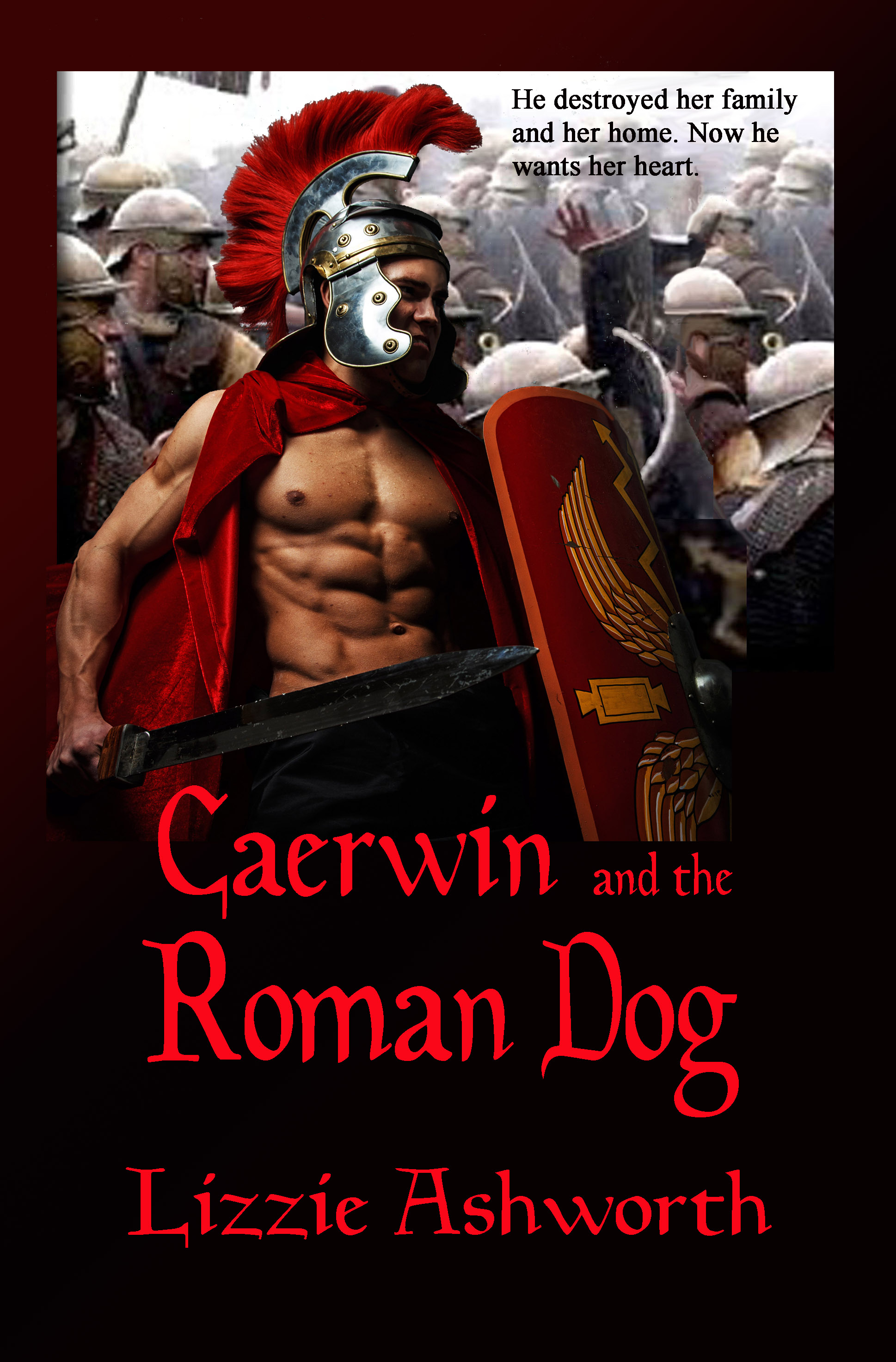
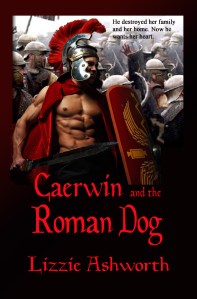
Caerwin and the Roman Dog

Caerwin cover*✩* 99¢ PRE-ORDER now through November 9 *✩*

Set in 47 AD, the story centers on a young Cornovii princess—Caerwin—who watches from the rocky battlements of her tribe’s hillfort as Rome’s legions approach. Devastation ensues as the Roman phalanx crushes Briton’s valiant warriors. Captured and held in Roman camp, she faces Legate Marcellus Antistius who makes it clear she will submit to his demands. In spite of her resistance, he forces her pleasure. She begs to die.

Caught between his increasing infatuation with this Briton princess and the demands of his military command, Marcellus must come to terms with his past.

A fiery novel of domination and submission, this historical romance follows Caerwin as she refuses to come to terms with her new reality: life as she knew it is over. Forever. In its place stands a man she can never love.

Excerpt:

The man she had seen on the white horse paused in the opening. His stare fastened on her and sent chills down her spine. He stood taller than the other men, his body of a stature more like her own people than these rat men of Rome. His layered metal vest had been removed as had his helmet and other outer garments, so that he wore only loose breeches that ended at his knees. She swallowed, casting her eyes away after her first long frozen moment.

“Do you like what you see?” he asked quietly.

The words shocked her, spoken fluently her familiar language. She turned to face him. Words rose to her lips but remained unspoken. He examined her, openly casting his gaze up and down her body as if he owned her. The terrible realization struck her—he did own her. She had been caught up at his command and now stood captive to his whim.

She spat in his direction and turned her face away. Tugging against the tight leather bonds, she succeeded only in chafing her wrists. Her nerves heightened to brittle pitch as she sensed him approaching. She knew what he would do, what such men did to captured women.

He placed himself in front of her, so close she could not look away without seeing his chest. His scent stung her nose, sharp and edged with the copper hint of blood. Stains marked his arms and face, sweat-encrusted dirt and smears of blood. His voice startled her, so close and so quiet.

“What is this trinket?” he asked, fingering the torque.

She glared at him. “Shall you steal it from me like you have stolen our lives and our land?”

“I wish only to converse with you, to ease this friendship we’ve started.”

She snorted and strained at the bonds holding her. “I wish only to kill you. I would leave your body for the crows.”

He grabbed her face and held her still while his mouth tasted her. His lips moved against her lips. His tongue sought the seam and when she refused to spread her jaw, he bit her lower lip. Her shocked cry gave him entry, and his tongue invaded her mouth, probing and pushing.

Hate rose in her chest, blinding her. She clamped her teeth down on his tongue, savoring a brief taste of blood as he jerked back.

Vipera!” He wiped his hand over his mouth. “You won’t win this battle, but if you wish a contest…” His big hand closed over the neck of her garment and ripped it down the front of her body. The beautiful woolen dress she had so carefully woven hung off her shoulders.

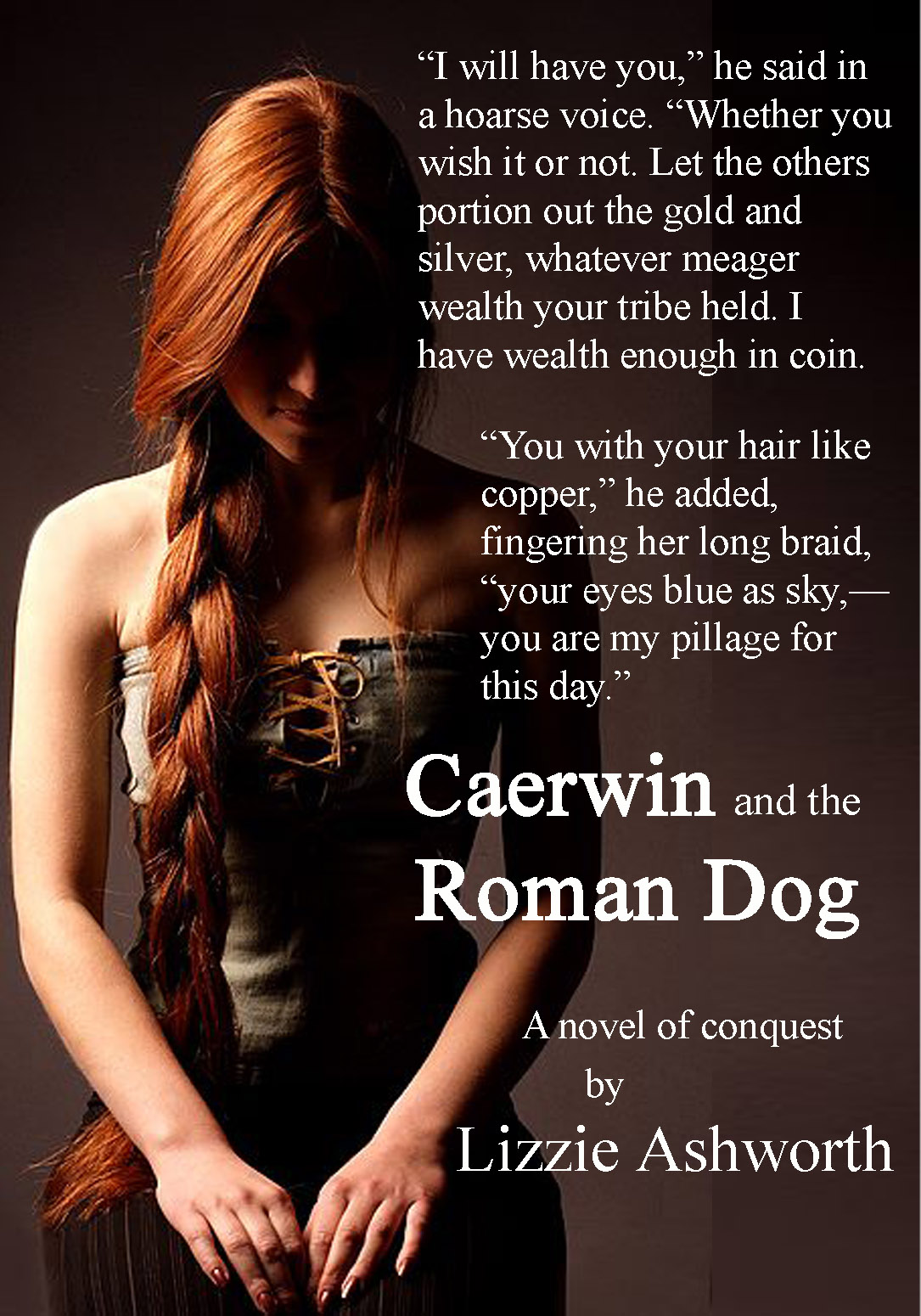
“I will have you,” he said in a hoarse voice. “Whether you wish it or not. Let the others portion out the gold and silver, whatever meager wealth your tribe held. I have wealth enough in coin. You with your hair like copper,” he added, fingering her long braid, “your eyes blue as sky—you are my pillage for this day.”

Evening damp had risen from the nearby river, and the cool air hit her exposed skin like a slap. She refused to look down on her nakedness or to meet his smirking gaze as he made a show of his careful examination. He pinched her nipples and probed the thatch of red hair between her legs.

“A virgin?” He laughed, pressing his finger deeper. “I’m surprised you’ve reached such an age without marriage. I will find much pleasure in this.”

She flinched at his intrusion. Were it not for the ties binding her ankles and wrists, she would have flown at him and gouged out his eyes. She cursed him, calling down the wrath of gods on him and his company.

“Your gods won’t help you,” he said, removing his finger and inspecting the faintly-red stain. “I’m your god now.”
Amazon → Buy link

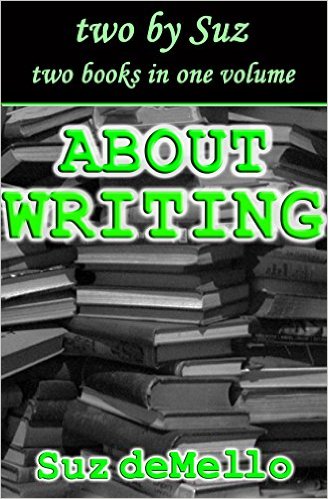
About Writing

suzAdvice on writing is like salt—too much or too little spoils the soup. Without adequate guidance, a novice writer, even experienced writers, risk boring their readers or disgusting them with simple but excruciating mistakes. Like the use of ‘very’ – a useless word that creeps in when you’re not looking. Writing tired? Writing lazy? Go back to your work in progress and perform a search and destroy mission on ‘very.’

The other side of the coin is advice that undermines a writer’s confidence to the point that her work is never quite her own. Years ago, I experienced a devastating loss of confidence when I enrolled in a graduate level writing workshop. The instructor had achieved some fame and students fawned over him, but I later discovered he had little patience for female writers. He liked hard hitting action akin to Hemingway. Not everyone writes like that and not all readers enjoy that style. But because I didn’t write that way, I subsequently spent years trying to heal the wounds.

Fortunately, a few books like Suz deMello’s “About Writing” steer the middle way. Just enough salt. Want to know the dumb mistakes you might overlook? Care to think of ways to keep your work in the active voice, propelling your readers forward? Here’s a quick and easy read that hits on the most critical points useful to newbies and experienced writers alike.

The book is presented in two parts. “Plotting & Planning” addresses structural basics such as how to build a scene and follow-up with a compelling sequel that leads to the next scene, a critical junction in every story. Authors naturally build scenes to tell their stories, but it never hurts to take a more analytical view of one’s work especially in the nasty midsection where action can grind to a halt. The second part, “Write This, Not That!” delves more into more subtle errors that can be systemic such as the use of an ‘info dump’ and clichés.

DeMello’s tone is friendly and her style is accessible. She doesn’t waste your time wandering off into esoteric philosophizing about the writing craft. Instead, here is a bucket of tools an author can refer to time and again. When in doubt, here’s the right measure of salt.

Amazon: http://goo.gl/cZeDMJ

Caerwin and the Roman Dog

Roman-Soldier-Horse350

I’m so excited to finish my first draft of a new novel! Set in 47 AD, the story follows a young Briton woman caught up in her tribe’s struggle to fend off Roman invaders.

Here’s a scene from the early pages of the book:

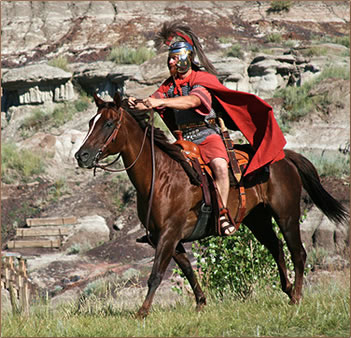
Horses appeared at the edge of the clearing. A white horse came first, a massive beast draped with red saddlecloth and gold ornamented breastplate and bearing a man of Roman rank. His red cloak swirled and the red plume cresting his fearsome helmet bristled as he pulled his horse short. Two dark horses came up on either side, also mounted by cavalrymen cloaked in the hated Roman red and bearing weapons of war. They held their shields close on their bared thighs and carried short swords dripping with the blood of her kinsmen.

For a long frozen moment, Caerwin stood without moving as her eyes locked with the dark stare of the man on the white horse. As if the ground could swallow her. As if she could summon the powers of the ancient ones and rise to the sky to fly away.

As if he spoke to her in some forgotten language.

Motioning toward her, he shouted words she did not understand. Immediately one of the men at his side kicked his horse forward. He came directly toward her, galloping across the clearing.

Virico’s ghost whispered in her ear. Run, Sister. We are dead.

Caerwin dropped the bucket and ran. She leapt over rocks and thickets of dog violet, struggling for balance along the precipitous slope. Her feet flew over the ground as the sound of hoof beats came ever nearer. Plunging into thickets of young rowan and yellow-blooming broom too dense for a man on horseback, she ignored the gorse thorns tearing at her flesh and deftly wove her steps southward across the familiar landscape.

Blood pounded in her ears. She would escape to the river and float downstream to the caves. She could hide there, wait until danger had passed then return to help the survivors. She ran headlong, ignoring the lash of limbs and stones that bruised her feet. The ground dropped sharply. She gasped for air, dodging side to side to keep from tumbling headfirst off the incline.

She strained to hear hoof beats over her ragged breath and pounding heart. She risked a glance toward the hilltop as she broke free from the thicket of gorse. Smoke rose in thick black plumes.

Strong arms grasped her midsection and hauled her upward. In one unceremonious thrust that knocked the breath from her lungs, the Roman hauled her belly down against his battle-stained thighs. He stank of gore and sweat.

“No!” she shouted, fighting against his grip as he swung the horse around. She cursed him, pounding his legs with her fists.

He pressed her down against the horse’s withers and made no response to her insults. As they galloped back, she twisted and fought against his grip. His strange words issued in a torrent then a hard blow struck her head. Light flashed across her eyes. Then her eyes stared and saw nothing.

Stay tuned for the final version, coming soon!

The Vikings Have Arrived!

vikingNew release — 13 story anthology, all sexy Viking tales. Here’s an excerpt from my story, “The Captive.” Near Lichfield, England, 880 AD:

“Dane, do you know why you were brought here?”

Elspeth, Lady of Hystead, gathered her thick red skirts and sat on the curved stool at the side of the room, opposite the spot where the broad-shouldered man stood. Her hungry gaze drank in the powerful strength of his legs, the ripple of muscle in his chest and arms, the iron line of his jaw. Even wounded, even smeared with the grit and gore of battle, his body glistened with male vigor.

Candlelight reflected off the lime-washed walls and framed the warrior’s furious stare. He strained against the bonds holding his wrists behind him and stretched the short length of rope between his ankles. Animal skins covered the stone-paved floor under his feet, one of few luxuries in the humble room with its bed, bucket of hot coals, and side table.

She turned to the two armed men who’d brought him. “Go now and bar the door until I call.”

An angry string of words followed the men as they departed. Elspeth heard the bar fall into place with a heavy thump.

Pale blue eyes flashed toward her, defiant.

“What of our language do you know, Dane? Can you speak?”

“I know enough,” he snarled, his words heavily accented. “What is your intent, woman?”

“My name is Elspeth, and it pleases me to see you.” His anger excited her, although she tried not to reveal any hint of her swelling desire. She sipped from her cup of ale. “Will you drink?”

His tongue slid over the crease of his narrow lips, but he gave no answer.

“You must be thirsty.” She poured another cup from the ewer and carried it to his mouth, tilting it forward.

He drank deeply. The line of his jaw slackened slightly, and she remained beside him, more intrigued than ever by his bristling strangeness. The grime of battle still coated his face and arms, but elsewhere, his body had been covered with clothing and armor, now mostly removed, so that he stood in rough pants that hung from his hips. Blood smeared from cuts on his arms and hands did not disguise the inked design scrolling over his tanned arms. A section of his yellow-white hair clumped against his scalp in a dried, darkened mass while the rest fell in tangles around his shoulders.

“Are all your kind so beautiful?” she asked quietly, trailing her fingertip across his chest. His nipples lay flat on the domed pectoral muscles and more ink patterned a fantastical beast between them. Hardly a hair curled there, although lower on his abdomen a faint line of darker hair collected downward to disappear at the waist of his pants. Her gaze lingered there briefly as her pulse quickened.

~~

Grab it now while it’s still 99 cents! (Free with Kindle Unlimited!)

Conquests: An Anthology of Smoldering Viking Romance, an anthology of thirteen hot tales of conquest! Edited by NY Times Bestseller Delilah Devlin.

The Magic Word

Books-to-Get-You-in-the-MoodI lead a double life. This is one of those moments when I’m in the twilight zone between those lives. Stuck.

As my alter ego, a writer of erotic romance, I fall in love with amazing men. I watch characters emerge from the page with their own agendas. I wander down long dusty roads into the past to tease out details of a love affair between a maid of early Briton and her Roman conqueror.

As my real person, I dig into local history and personalities. I blog about travels and memories, Most recently I’ve blogged about issues in the news that stir my venom against patriarchy and ignorance. My blood is up.

Days have passed as I-as-my-real-self flogged the keyboard, brainstorming how to phrase in even more impactful ways all the harms caused by religious extremism. For now, I’ve mostly satisfied myself that I’ve read the reports, the research, that informs and elaborates on my ideas. I’ve put it out there. I’m done, at least for now.

All this time, I’ve longed to return to the misty hills of northern Wales where my maid awaits her next confrontation with the Roman commander. Her future is unknown, as is the future of the Roman legion camped a short distance away. The story will unfold only as I type the words.

I want to read this story!

But my blood is up. I’m restless. Arguments still echo in my real-person head. I’m finding it impossible to slip back into the green rocky hills where Caerwin waits, against her will, for Marcellus.

The solution for today’s dilemma? It was so simple, I don’t know why I didn’t remember it from the last time I ran up this stump.

Read. The magic word. I will read. No writing required.

I’ll set aside the real world and its daunting problems. I’ll indulge myself by investing in the latest novel by one of my favorite edgy authors, Tiffany Reisz. I’ll spend the rest of this day in her stunning world of sex and angst.

I’m relaxing now. Planning lunch. Birds chirp outside my window. From wherever I arrive by the end of her book, I’m confident I’ll soon find my feet walking ancient byways in long ago Britannia.